

What is matcha tea?
The favourite tea of Buddhist monks, samurai, and Japanese emperors, matcha is a unique green tea, as it comes not in the form of dried leaves, but as an emerald green powder. To produce it, tea leaves are ground between two granite stone blocks. It is enjoyed by whisking it into a froth in a bowl using a bamboo whisk. Its great uniqueness lies in the fact that it is not merely infused, but entirely ingested during tasting. A true delight!
Why is matcha tea more expensive than other teas?
Japanese green tea is, on average, more expensive than Chinese or Indian tea. This is due to several reasons, including the production method and the cost of labour, which is very high in Japan. Compared to traditional green tea, additional steps are required for matcha tea, such as shading the tea plants at the end of their growth or grinding the tea leaves (stems and veins are removed), requiring skilled workers. Furthermore, in Japan, consuming matcha has been elevated to a true art form, with the tea ceremony bestowing its noble reputation. This also plays a part in its prestige and price. Finally, because domestic demand for matcha tea is strong in Japan and agricultural land is scarce, exports remain limited. When they do take place, transport costs are added to the bill. All of this makes Japanese matcha green tea particularly rare, sought-after, and expensive. What's more, matcha tea offers numerous health benefits!
How do you recognise a good matcha?
When ordering online or even in-store, it is difficult to taste before buying. Nonetheless, certain details provide good clues about the quality of matcha tea and justify its price. A good matcha will have been grown in Japan, where the country ensures strict quality control. In other Asian countries (China, South Korea, Taiwan, Vietnam) that have started producing it, quality can be less reliable. Indeed, without an internationally recognised designation, they are free to call any green tea powder "matcha"... which can lead to a few unpleasant surprises. If you can open the tin, the colour of the matcha tea will be a great indicator of its quality. The brighter the emerald green, the fresher the matcha tea is guaranteed to be. Conversely, a dull tea, or one with yellow and brown hues, is a bad sign, meaning the stems and veins were ground along with the rest of the tea leaves.

What are the different grades of matcha tea?
Moving up the range, you will first find culinary or cooking matcha. Made from the lowest leaves of the tea bush or from the third tea harvest, these less refined matchas are intended for baking recipes or mixed drinks, as their taste is more bitter. Next, the premium matcha grade guarantees that only high-quality tea leaves from the second harvest have been used. This is a tasting tea, to be enjoyed pure in order to savour its umami (a lasting, sweet aftertaste). Another designation that sometimes appears: ceremonial matcha tea refers to an even higher quality tea from the first harvest, used during the tea ceremony. Other brands may then develop their own even higher-end designations, such as "prestige", "imperial", or "ultra premium", sometimes to justify steep prices. Marketing at its finest!
What is the price range of a good matcha?
For cooking matcha tea, you will find average prices ranging from £110 to £170 per kilo (£11 to £17 per 100 grams). From there, prices rise steadily depending on the quality grade and whether or not it is organically grown. Thus, you can easily reach £250 to £430 per kilo (£25 to £43 per 100g) for a good matcha. In Japan, the most expensive award-winning matchas can sometimes fetch up to £1,700 per kilo!
Which variety of matcha is the most expensive?
As explained above, ceremonial matcha tea is the most renowned, as it contains the finest parts of the tea leaves. It is naturally the most expensive matcha. If, in addition to this, you opt for an organically grown matcha tea, you will obtain an even higher quality product. However, this pesticide-free, eco-friendly organic farming is subject to very strict international standards, making it more costly.
Discover Kusmi Tea organic matcha tea!
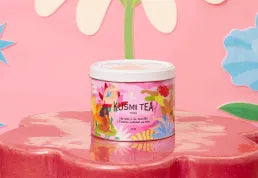
At Kusmi, all the teas and infusions offered by our House are organic, packaged in France, and presented in eco-friendly packaging. Our matcha tea, grown in Japan, is available in a 30g tin or a 100g refill pouch. The organic certification guarantees rigorous quality checks throughout the production and crafting of the tea. This ensures you are buying a pesticide-free tea cultivated with respect for the environment.
Our expert reviews on matcha tea
This green tea powder straight from Japan is sure to delight the most discerning and refined palates. Matcha tea is truly the cream of the crop when it comes to tea. Packed with multiple benefits, it is renowned for its antioxidant, diuretic, purifying, and energising properties. Intriguing, isn't it?