
What is ginseng?
Origin
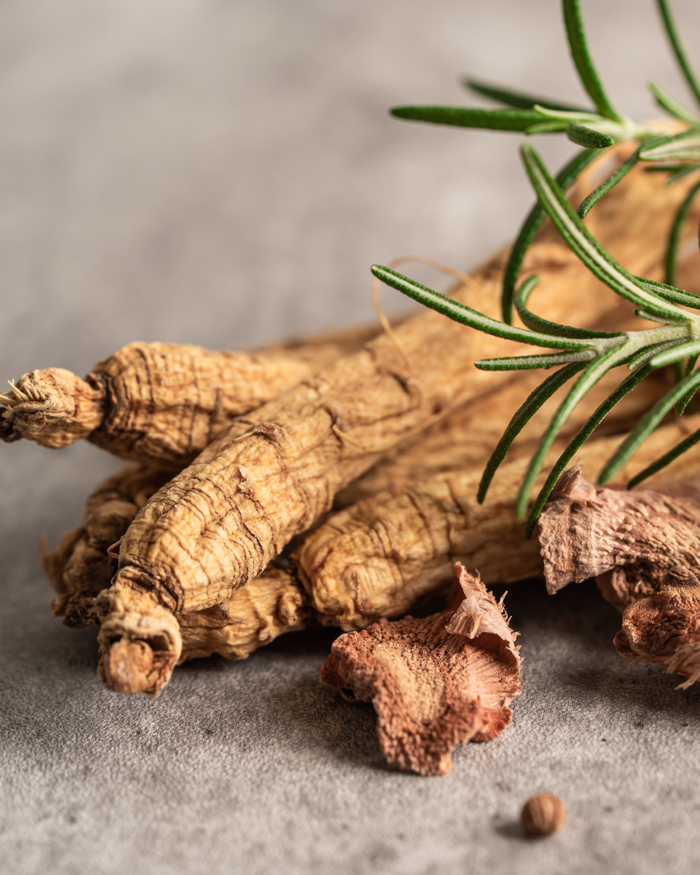
Ginseng (Panax ginseng) is an adaptogenic root used for thousands of years in traditional Asian medicine, particularly in China, Korea and Japan, for its exceptional benefits. Its best-known botanical name is Panax ginseng. The term ‘Panax’ comes from Greek and means ‘all-healing’, reflecting the historical importance attached to this plant.
The root later became known and sought after in the Western world for its seemingly magical properties. Belonging to the Panax genus of the Araliaceae family, this root, with its stimulating and invigorating properties, plays a crucial role in health and the maintenance of mental performance.
Its beneficial effects stem from ginsenosides, active principles renowned for stimulating cognitive performance and improving memorisation abilities. That is why Kusmi Tea has chosen to incorporate ginseng extract into its new Rituel Mémoire tea.
What is an adaptogenic plant?
An adaptogenic plant improves the body's ability to resist various types of stress and helps it adapt to physical or mental exertion. Among the best known are ginseng, maca, rhodiola and ashwagandha. By strengthening the body's resilience, these plants contribute to improving intellectual and physical performance while promoting sleep quality.
Ginseng cultivation
This root of Asian origin needs to be cultivated for 6 to 7 years so that the roots reach maturity and can develop all of their benefits. There are currently 4 species of Panax found in phytotherapeutic products, generally classified under the heading "ginseng": Panax ginseng (Asian ginseng, Korean ginseng) used in our Thé Rituel Mémoire, Panax quinquefolius (American ginseng), Panax notoginseng (San-chi ginseng) and Panax pseudoginseng (Japanese ginseng). However, not all have the same virtues or are cultivated in the same way.
The different varieties of ginseng
Although the term ‘ginseng’ is often used generically, there are several varieties. The best known is Asian ginseng (Panax ginseng), native mainly to China and Korea. It is also the variety most commonly found in well-being drinks, teas and food supplements. Its cultivation and use are deeply rooted in East Asian traditions.
Another important variety is American ginseng (Panax quinquefolius), grown mainly in the United States and Canada. Although it belongs to the same botanical genus as Asian ginseng, it has certain distinctive characteristics and is becoming increasingly popular in North American and European markets.
You may sometimes hear of Siberian ginseng, or Eleutherococcus senticosus. Despite its name, however, it is not botanically a true ginseng. This plant belongs to a different family, but it is often associated with ginseng because of some similar traditional uses.pdiv>
Finally, Indian ginseng generally refers to ashwagandha (Withania somnifera). Again, it is not a true ginseng, but the name is sometimes used because of its important place in Indian Ayurvedic traditions.
What are the differences between yellow and red ginseng?
Ginseng roots are yellow when they are simply dried. They turn red when they have been treated with steam. It is essential to pay attention to the quality and origin of the product to guarantee optimal action on the body. At Kusmi Tea, we select quality organic ingredients to offer you effective products rich in active principles.
What is the difference between ginseng and ginger?
Ginseng and ginger are often confused because of their names and root-like appearance, but they are two completely different plants. Ginseng belongs to the genus Panax and is grown mainly in Asia and North America. Ginger (Zingiber officinale), meanwhile, is a tropical plant native to South-East Asia and widely used as a spice in cooking.
The five main benefits of ginseng
Nicknamed the ‘root of life’ because of its many benefits, ginseng is a powerful natural stimulant. Numerous studies have highlighted the properties of its active compounds, ginsenosides, particularly their effects on the immune system: reducing the risk of infection and influencing white blood cells and their regulation of inflammatory responses.
But what makes ginseng particularly interesting is its many benefits for mental performance.
Reduction of oxidative stress:
Thanks to its so-called adaptogenic properties, it is traditionally consumed to promote overall balance and the ability to adapt to external pressures.
Improved mental performance:
By promoting neural connections, ginsenosides improve learning and memory. They also act on acetylcholine, a neurotransmitter essential to memory and attention. Finally, they protect nerve cells from premature ageing.
Increased vitality
Traditionally used as a tonic herb, ginseng is reputed to help reduce feelings of fatigue and support energy levels. It supports the body during temporary dips in energy and helps maintain physical and mental performance, making it a key ingredient in drinks and supplements designed for well-being.
Acts on the immune system:
Ginseng is also known for its beneficial effect on the body’s natural defences. Several studies have examined its role in supporting the immune system, which explains why it features in many well-being formulations designed to support the body, particularly as the seasons change.
How should you consume ginseng?
Ginseng is generally consumed as a food supplement, powder, infusion or whole roots prepared as a decoction.
Our Rituel Mémoire Tea
Kusmi Tea has created a unique, innovative blend so you can enjoy all the benefits of ginseng: a green tea and mate blend inspired by Earl Grey, enriched with ginseng extract. Its perfect combination of green tea, mate, bergamot, lemon and ginseng takes you away for a moment of pure well-being. Rituel Mémoire is available in a tin, loose-leaf and in tea bags, so you can enjoy its benefits whenever and wherever you like!
Discover it now! Ginseng tea

What precautions should be taken?
Contraindications
People with diabetes, high blood pressure or cardiovascular disease are advised not to consume ginseng without prior medical reviews. People with obesity, insomnia or nervousness should also consume it with caution.
The WHO also advises against the consumption of ginseng by pregnant and breastfeeding women, and by children under 18.
Side effects and overdose of ginseng
Although this Asian root offers many benefits, excessive consumption of this root can lead to side effects such as irritability, sleep disturbance or an increase in blood pressure.
What daily dose is recommended?
Clinical studies show that the amount of ginseng contained in three cups of Rituel Mémoire a day is sufficient to stimulate concentration and memory. Consuming more will not necessarily enhance the desired effect. As with any product, excessive consumption is not recommended. If in doubt, consult a healthcare professional.